Introduction
Artificial Intelligence is no longer a futuristic concept reserved for science fiction movies or advanced research laboratories. It has become one of the most transformative forces of the modern era, reshaping industries, redefining productivity, and influencing nearly every aspect of human life. From personalized recommendations on streaming platforms to self-driving technology, virtual assistants, healthcare diagnostics, and business automation, AI is rapidly becoming the foundation of the digital world.
Organizations across the globe are investing billions into AI-driven technologies because the potential benefits are enormous. Businesses are improving efficiency, reducing operational costs, making smarter decisions, and delivering better customer experiences. Meanwhile, individuals are using AI tools to enhance creativity, accelerate learning, and simplify everyday tasks.
Yet despite its widespread adoption, many people still misunderstand what AI truly is and how deeply it impacts society. Artificial Intelligence is not simply about robots replacing humans. At its core, AI is about enabling machines to analyze information, recognize patterns, solve problems, and perform tasks that traditionally required human intelligence.
The rise of AI marks the beginning of a new technological revolution — one comparable to the invention of the internet or the industrial revolution itself. Those who understand and adapt to this shift will thrive in the years ahead. Those who ignore it risk falling behind in an increasingly competitive and technology-driven world.
This article explores the growing importance of AI, its applications across industries, the advantages it offers, the challenges it presents, and why embracing AI is essential for future success.
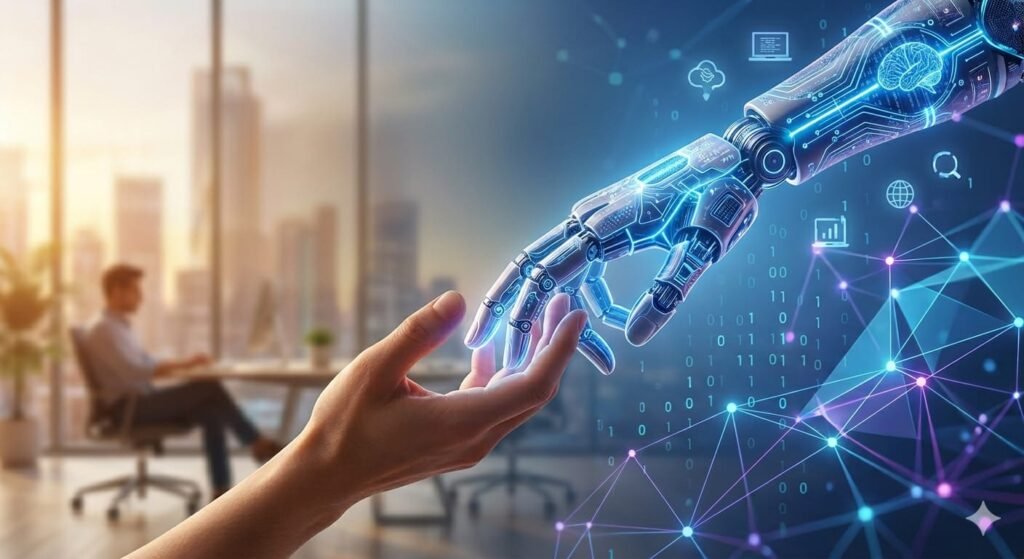
Understanding Artificial Intelligence
Artificial Intelligence refers to computer systems designed to simulate human intelligence and perform tasks such as learning, reasoning, decision-making, language understanding, and problem-solving. Unlike traditional software that follows fixed instructions, AI systems can improve their performance over time by analyzing data and identifying patterns.
AI technologies include:
Machine Learning
Natural Language Processing
Computer Vision
Robotics
Predictive Analytics
Deep Learning
These technologies work together to create systems capable of performing increasingly complex tasks with remarkable speed and accuracy.
For example, AI-powered chatbots can communicate naturally with customers, recommendation systems can predict consumer preferences, and advanced algorithms can detect diseases earlier than traditional diagnostic methods.
The true power of AI lies in its ability to process enormous amounts of information far faster than any human could. This allows businesses and organizations to make informed decisions in real time and operate with greater precision.
The Role of AI in Everyday Life
Many people interact with AI daily without even realizing it. Artificial Intelligence has quietly integrated itself into modern life, making services more convenient, personalized, and efficient.
Consider the following examples:
Smart Assistants:
Virtual assistants like Siri, Alexa, and Google Assistant use AI to understand voice commands, answer questions, and automate tasks.
Streaming Recommendations:
Platforms such as Netflix and Spotify rely on AI algorithms to recommend content based on user behavior and preferences.
Online Shopping:
E-commerce websites use AI to analyze customer activity, suggest products, and optimize pricing strategies.
Navigation and Transportation:
GPS applications use AI to predict traffic conditions, identify faster routes, and improve travel efficiency.
Social Media Algorithms:
Social media platforms use AI to personalize feeds, detect harmful content, and deliver targeted advertisements.
AI has become so embedded in daily life that many modern conveniences would be impossible without it.
AI in Business and Industry
Businesses are among the biggest beneficiaries of Artificial Intelligence. Companies across industries are leveraging AI to streamline operations, improve productivity, and gain a competitive advantage.
Enhancing Customer Service:
AI-powered chatbots and virtual support agents can handle customer inquiries 24/7, reducing wait times and improving customer satisfaction. Businesses can provide immediate support without relying entirely on human representatives.
Data-Driven Decision Making:
Organizations generate massive amounts of data every day. AI helps analyze this data quickly and accurately, allowing companies to identify trends, predict outcomes, and make smarter strategic decisions.
Automation of Repetitive Tasks:
AI can automate repetitive administrative tasks such as scheduling, invoicing, inventory management, and data entry. This frees employees to focus on higher-value work that requires creativity and critical thinking.
Marketing Optimization:
Digital marketers use AI to understand customer behavior, personalize campaigns, and improve conversion rates. AI can identify which advertisements perform best and optimize marketing efforts in real time.
Cybersecurity:
AI systems can detect suspicious activity, identify threats, and respond to cyberattacks faster than traditional security systems. As cybercrime grows increasingly sophisticated, AI-driven protection is becoming essential.
The Impact of AI on Healthcare
One of the most promising applications of AI is in healthcare. Artificial Intelligence is helping medical professionals diagnose diseases earlier, develop personalized treatment plans, and improve patient outcomes.
Faster and More Accurate Diagnoses:
AI systems can analyze medical scans, detect abnormalities, and assist doctors in identifying diseases such as cancer, heart conditions, and neurological disorders with impressive accuracy.
Drug Discovery
Developing new medications traditionally takes years of research and billions of dollars. AI accelerates this process by analyzing chemical compounds and predicting potential treatments more efficiently.
Personalized Medicine:
AI enables healthcare providers to tailor treatments to individual patients based on genetic information, medical history, and lifestyle factors.
Administrative Efficiency:
Hospitals use AI to manage records, schedule appointments, and optimize workflows, reducing administrative burdens on healthcare staff.The integration of AI into healthcare is not only improving efficiency but also saving lives.
AI and Education:
Education is another sector undergoing rapid transformation through AI technology. AI-powered learning platforms can personalize educational experiences based on a student’s strengths, weaknesses, and learning pace. Instead of a one-size-fits-all approach, students receive customized support that improves engagement and retention. Teachers also benefit from AI through automated grading systems, administrative assistance, and performance analytics that help identify students needing additional support. Furthermore, AI makes education more accessible by offering language translation tools, virtual tutoring, and adaptive learning systems that reach students worldwide. As education becomes increasingly digital, AI will play a central role in shaping how future generations learn and develop skills.
The Creative Power of AI:
Contrary to popular belief, AI is not limited to technical or analytical tasks. It is also transforming creative industries.
Today, AI can assist with:
Writing articles and marketing copy
Generating digital artwork
Producing music
Editing videos
Designing graphics
Creating animations
Rather than replacing human creativity, AI often acts as a powerful collaborative tool. Writers, designers, musicians, and content creators can use AI to brainstorm ideas, speed up workflows, and enhance productivity. Businesses are increasingly adopting AI-generated content strategies because they allow faster production while maintaining quality and consistency. The future of creativity will likely involve humans and AI working together to produce innovative and engaging experiences.
Challenges and Ethical Concerns:
Despite its advantages, AI also raises important ethical and societal concerns.
Job Displacement:
Automation may replace certain repetitive jobs, particularly in manufacturing, customer service, and administrative roles. While AI creates new opportunities, it also requires workers to adapt and develop new skills.
Privacy Issues:
AI systems rely heavily on data collection. This raises concerns about how personal information is stored, used, and protected.
Bias in Algorithms:
AI systems can inherit biases from the data they are trained on, leading to unfair or discriminatory outcomes. Ensuring fairness and transparency in AI development is critical.
Dependence on Technology:
As society becomes more reliant on AI, there is growing concern about overdependence on automated systems and reduced human decision-making.
Security Risks:
AI can be misused for cybercrime, misinformation campaigns, surveillance abuse, and malicious automation. Addressing these challenges requires responsible development, ethical regulation, and collaboration between governments, businesses, and technology leaders.
Why Businesses Must Embrace AI:
The question is no longer whether businesses should adopt AI — it is whether they can afford not to.
Companies that embrace AI gain several competitive advantages:
Increased efficiency
Lower operational costs
Faster decision-making
Better customer experiences
Stronger market positioning
Improved scalability
Businesses that resist technological innovation risk becoming outdated in rapidly evolving markets. AI adoption is not just about staying current. It is about preparing for the future. Organizations that integrate AI strategically today will lead tomorrow’s economy.
The Future of Artificial Intelligence:
The future of AI holds extraordinary possibilities. Experts predict AI will continue advancing in areas such as:
Autonomous transportation
Smart cities
Advanced robotics
Personalized healthcare
Scientific research
Climate change solutions
Financial forecasting
Human-computer interaction
As AI becomes more sophisticated, it will likely transform industries in ways we cannot fully predict today. However, the future of AI should not be viewed with fear alone. While challenges exist, AI also presents unprecedented opportunities for innovation, economic growth, and societal progress. The key lies in using AI responsibly and ensuring that technological advancement benefits humanity as a whole.
Conclusion
Artificial Intelligence is one of the most influential technologies ever created. It is revolutionizing business, healthcare, education, communication, and creativity at an astonishing pace. AI is helping organizations operate more efficiently, empowering individuals with new tools, and opening doors to innovations once considered impossible. At the same time, AI challenges society to think carefully about ethics, privacy, employment, and responsibility. The decisions made today regarding AI development and regulation will shape the future for generations to come. What is certain, however, is that AI is not a passing trend. It is a defining force of the modern world. Those who learn to understand, embrace, and responsibly leverage AI will be better positioned to succeed in an increasingly digital future. Whether you are a business leader, student, entrepreneur, or professional, the time to engage with AI is now. The future belongs to those willing to innovate — and Artificial Intelligence is leading that transformation.